History Of Medersa Ben Youssef
From a 14th-century Marinid foundation to the largest Quranic school in the Maghreb, discover the story behind Marrakech's most ornate madrasa.
A Marinid Foundation, A Saadian Masterpiece
The Medersa Ben Youssef, in the heart of Marrakech's Medina, is the largest Islamic college ever built in the Maghreb. Named after the neighbouring Ben Youssef Mosque — itself named for the 12th-century Almoravid sultan Ali ibn Yusuf — the madrasa as it stands today is largely the work of the 16th-century Saadian dynasty, built to train students in Quranic law and theology.
The Birth of the Medersa
The first school on this site was founded in the 14th century under the Marinid sultan Abu al-Hasan, who reigned from 1331 to 1348. It stood beside the Ben Youssef Mosque, which had already been the spiritual and educational anchor of this quarter of the Medina for two centuries.
Rebuilt by the Saadians
Almost nothing of the Marinid building survives today. In the 1560s, the Saadian sultan Abdallah al-Ghalib ordered the madrasa rebuilt almost entirely, and construction was completed in 1564–1565. On completion, it became the largest madrasa in the Maghreb, with dormitory cells for as many as 800 students studying alongside the mosque next door.
A Showcase of Craftsmanship
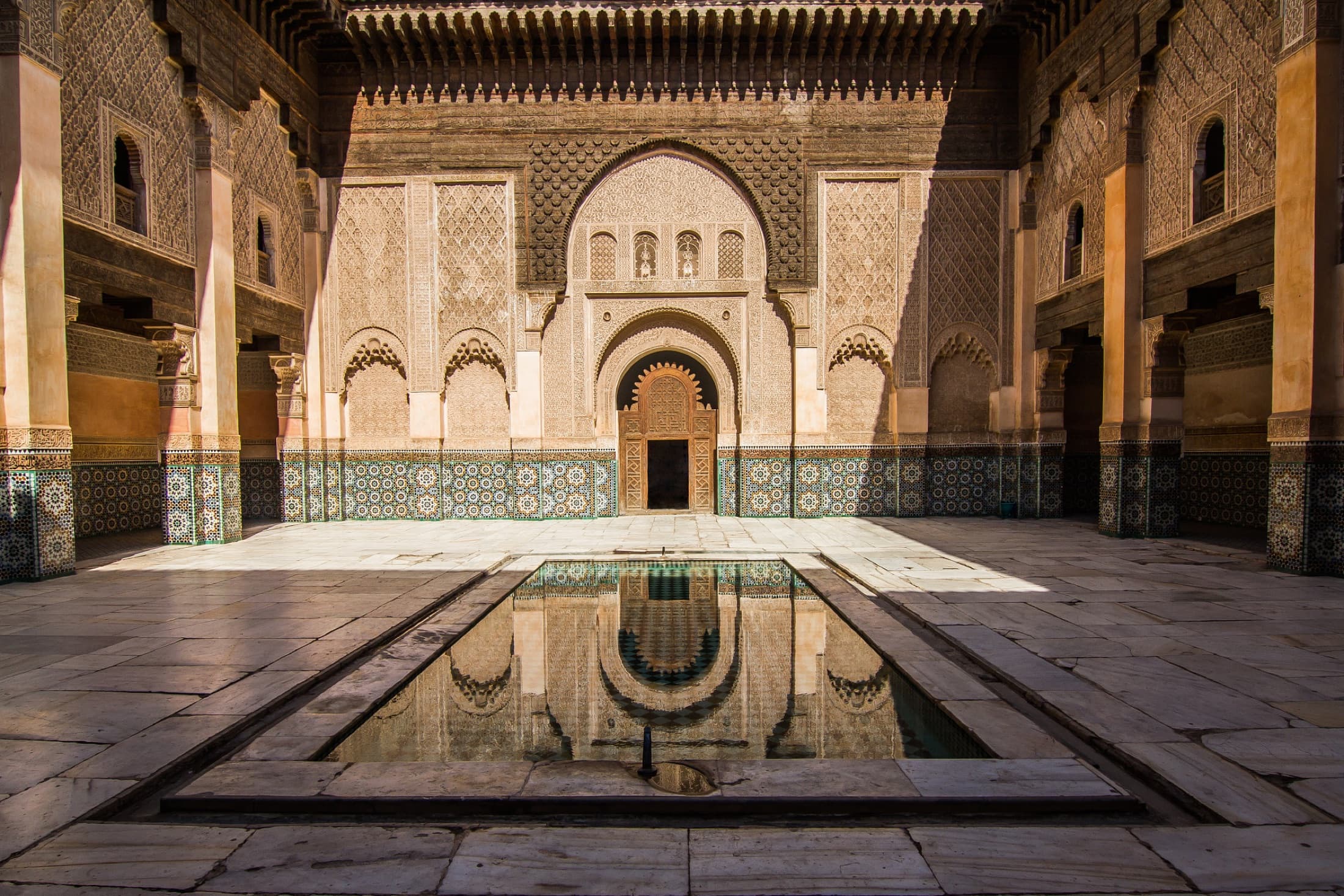
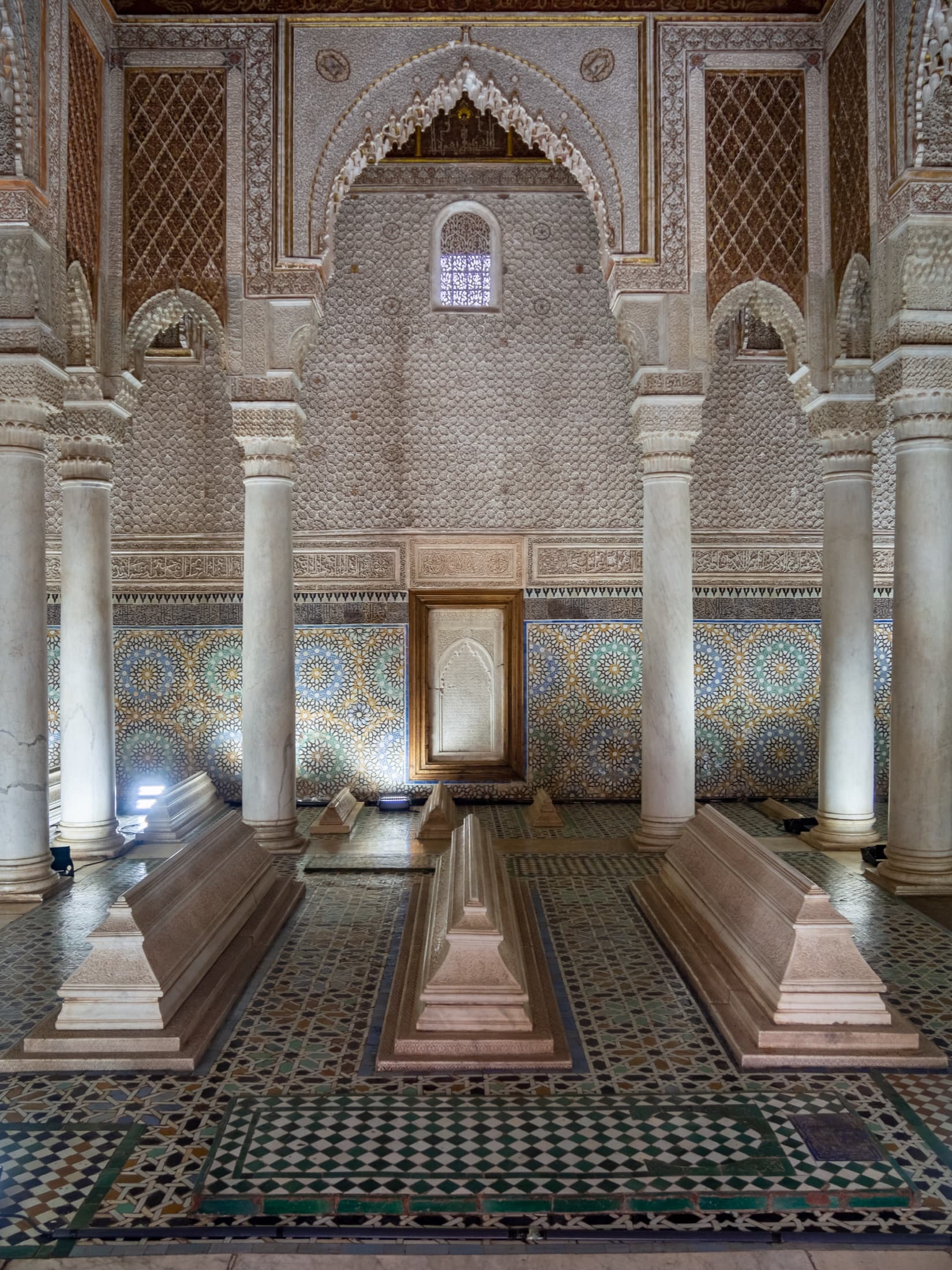
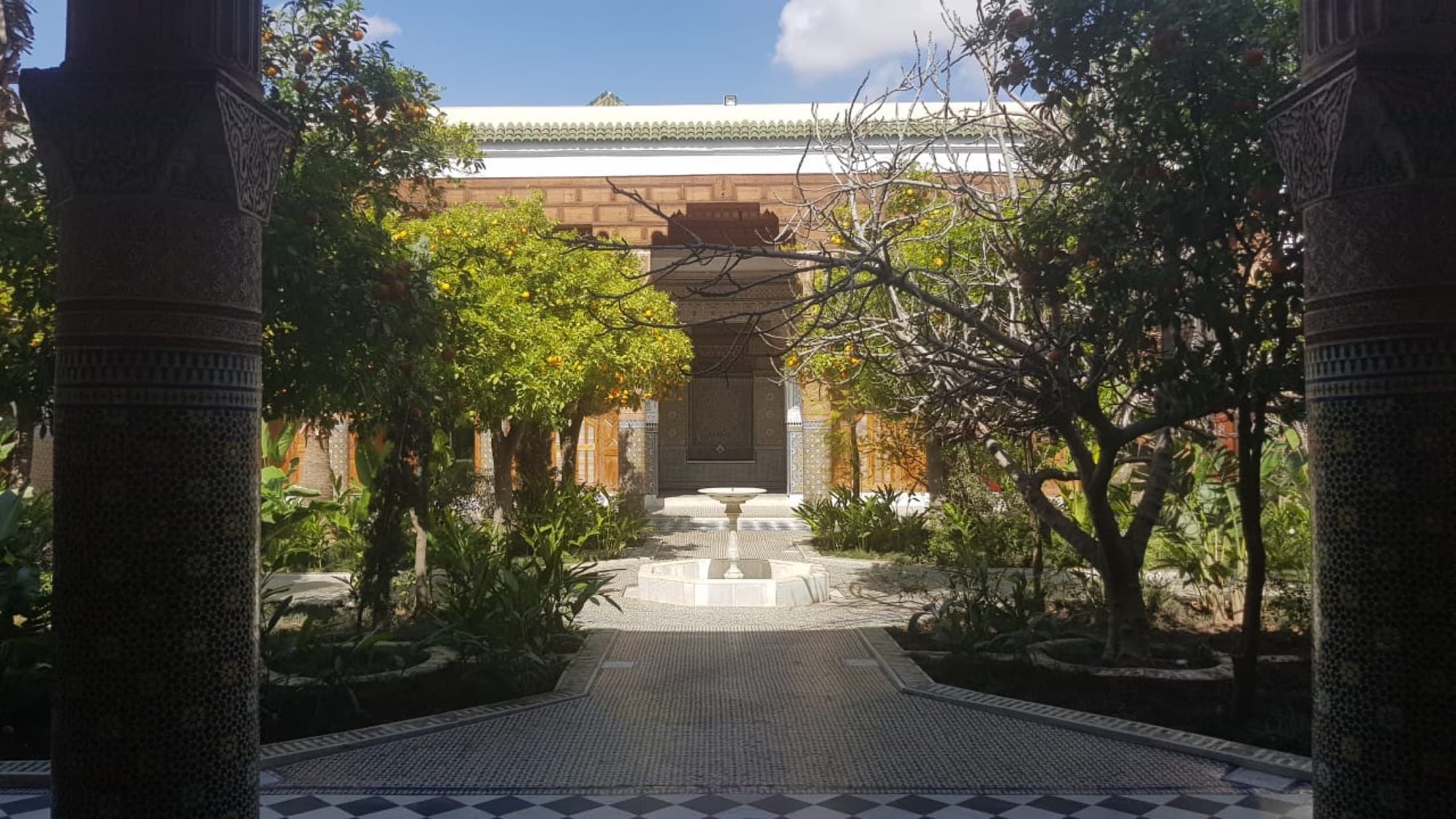
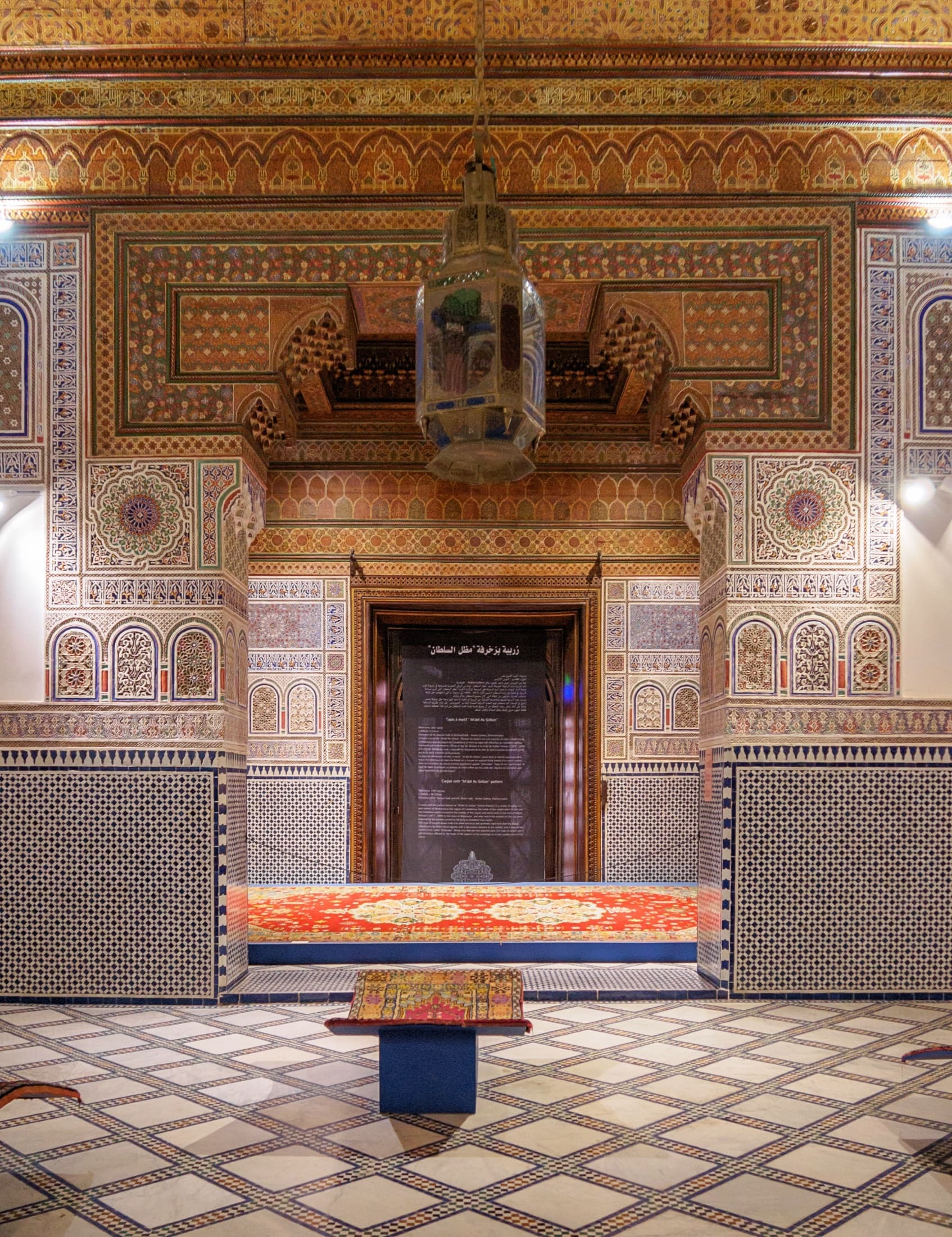
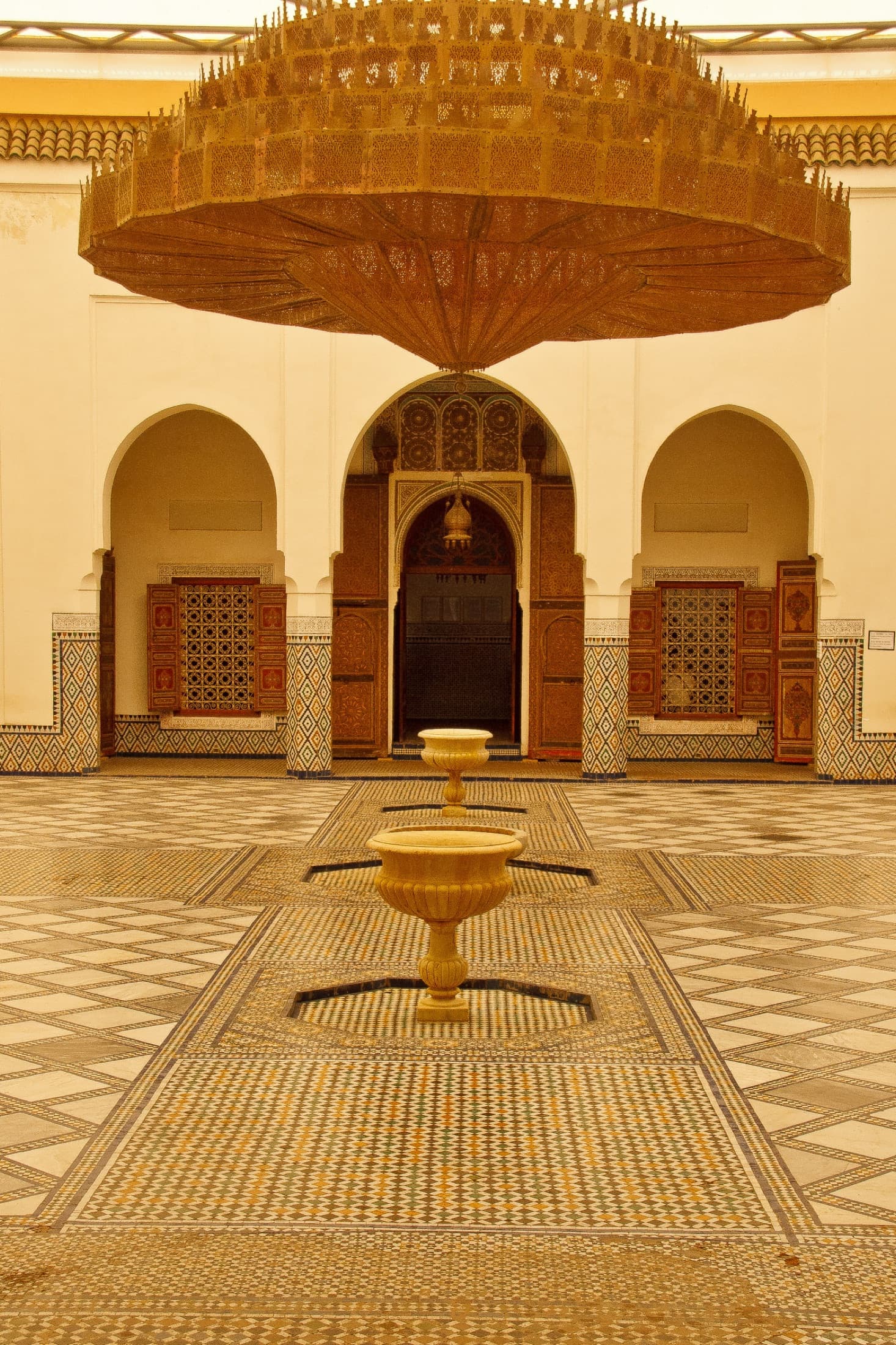
The nearly square courtyard, some 40 by 43 metres, centres on a marble reflecting pool flanked by galleries of carved cedar wood, sculpted stucco, and dense zellige mosaic tilework. Around it, 130 small student cells are arranged over two upper floors. Inside the prayer hall stands one of the building's oldest treasures: an 11th-century marble ablutions basin carved in Córdoba between 1002 and 1007, brought here centuries after it was made.
UNESCO Recognition
The Medersa Ben Youssef sits within the Medina of Marrakesh, which UNESCO inscribed as a World Heritage Site in 1985 in recognition of its architecture and urban heritage dating back to the city's 11th-century Almoravid founding. The madrasa's Saadian-era decoration is counted among the finest examples of that heritage.
Closure, Revival, and Restoration
The madrasa continued to function as a school until 1960, when it closed its doors to students. It reopened to the public as a historic monument in 1982. Decades later, an extensive restoration campaign begun in November 2018 revived its zellige, stucco, and cedarwork before it reopened once again in April 2022.
Conclusion
The Medersa Ben Youssef is more than a relic of Marrakech's academic past; it is one of the finest surviving examples of Saadian craftsmanship in the city. Walking through its courtyard and climbing to the student cells above, visitors today follow the same paths generations of scholars once did.